How Many Dials Per Day Should a Sales Rep Make?
How Many Dials Per Day Should a Sales Rep Make?
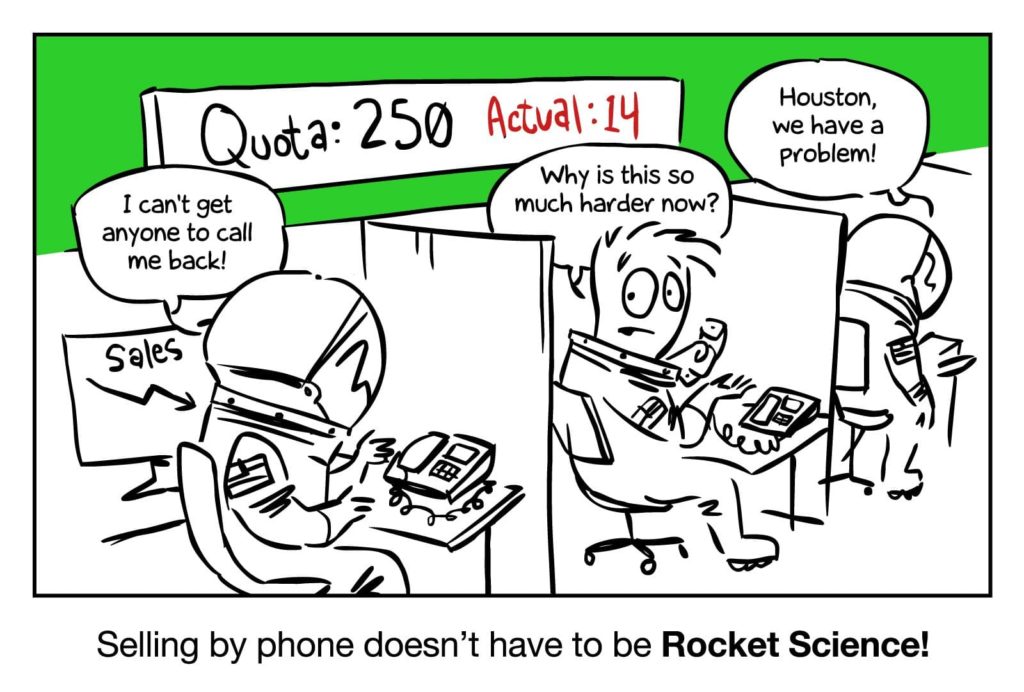
The #1 complaint sales leaders hear from their reps today is:
“No one answers their phone anymore.”
COVID and WFH may have changed the game, but let’s be honest—most reps are using that as an excuse. And too many sales managers are buying what their reps are selling… until the axe from above comes down.
Sales is a results-based business. If the results aren’t there, eventually, personnel changes are.
So let’s go back to basics.
The Real Answer: How Many Sales Calls Should a Rep Make Daily?
60 dials a day and/or 3 hours of talk time.
That’s the benchmark. Always has been. And here’s why it still works in 2025.
Now before you blow a gasket and complain about how that’s not realistic, hear me out.
I’ve worked as a straight-commission B2B inside sales rep for most of my life. At most places, you were expected to smile and dial from 9 AM to 6 PM. But there was one company that changed the game for me, and it’s where this benchmark was born.
The Story That Proves the Rule
I was one of 20 reps interviewing for a spot at duPontREGISTRY, selling online listings to luxury car dealerships. After the group interview, 19 reps went home. I stayed.
The hiring manager and the president of the internet division sat me down and said:
“We’ll need you to make 100 dials a day.”
I paused.
“Uh, I don’t think I can do that.”
The hiring manager turned ghost white. He’d just rejected 19 other candidates—and now his one pick was saying no?
But the president—the best boss and sales leader I’ve ever had—asked me why.
I said:
“I’m really good at getting and keeping prospects on the phone. If I’m making 100 dials a day, I’m not talking to anyone.”
He nodded. Then told me the truth.
“We say 100 dials, knowing most will fall short. But the real benchmark is 60 dials a day and/or 3 hours of talk time. That’s what I did to get where I am now. Can you do that?”
I agreed. My average was around 40 dials a day prior to joining – I was intrigued if adding 20 additional dials a day would make a difference, and it sure did!
I became the #1 rep there within my first month—and stayed there for the entire year I worked at duPontREGISTRY.
Why 60 Dials a Day Still Works
Because talk time is the goal, but dials are the lever.
You can’t control talk time. That’s an outcome goal.
But dials? You control those. That’s a process goal.
You control how many times you pick up the phone and call. You do not control whether they pick up.
There will be days when you make 60 dials and only get 45 minutes of talk time. And other days when you can only do 18 dials, but have 3 hours of talk time.
That’s fine. The point is consistency. 60 dials a day and or 3 hours of talk time. Which ever comes first. Every day, five days a week. Not once or twice a week. Every day or it won’t work. Do it for one month and watch your pipeline fill up fast.
What’s not fine?
Only making 20 dials and having an hour of talk time. What did you do the other 7 hours?
How to Hit 60 Dials a Day Without Burning Out
Here’s how I did it—and how I train thousands of top reps to do it:
1. Prep Your List the Night Before
Don’t waste your morning researching leads. Start your day ready to dial.
2. Use the “Double Tap”
When your sales call is about to go to voicemail, hang up, wait 5 seconds, and call again. This increases pickup rates by 20% and increases your dials.
3. Leave Voicemails That Trigger Callbacks
A callback is a bonus dial and talk time. But only if you know what to say.
4. Call the Main Line
Still no answer after two tries? Call the company’s main number and speak to the gatekeeper. Most companies always answer their main line.
That’s 3 dials for one lead—and a live conversation.
5. Use Smart Call Blocks
Don’t wing it. Build a call structure into your day so you don’t get buried in distractions or waste your peak focus hours on emails and follow-ups.
Here’s the system I used to build a 7-figure company from scratch:
Morning: First-Time Dial Blitz
-
9:00 – 9:45 AM: First-time dials only
-
9:45 – 10:00 AM: Quick email + CRM update break
-
10:00 – 10:45 AM: Back on first-time dials
-
11:00 AM – 12:00 PM: Power Hour #1 – full throttle outbound
Your goal before lunch? 40 dials. No excuses. No follow-ups. First attempts only.
Afternoon: Follow-Up & Close-Out
-
1:00 – 1:45 PM: Follow-up calls + second attempts
-
2:00 – 2:45 PM: Follow-up + email replies
-
3:00 – 3:45 PM: Mix of follow-ups + new if needed
-
4:00 – 4:45 PM: Clean up your list, prep final stretch
-
5:00 – 6:00 PM: Power Hour #2 – your last big push
Call reluctance creeps in late in the day. Ignore it. Leave nothing in the tank.
Even if today ends with zero connects, if you put in the work every day, the callbacks will start. That’s momentum. That’s inertia. And that’s what turns dry spells into hot streaks.
Pro Tip: Yes, follow-up calls count toward your daily dial and talk time benchmarks. But they’re best saved for the afternoon when your energy and mental sharpness dip.
Eat the frog early—glide in the afternoon.
And Why Was I Only There for One Year?
At that time, I had a business idea that wouldn’t shake. Something I was obsessed with. After hitting my dials, closing deals, and spending time with my family after work… I’d stay up until 2 AM building my side hustle.
This wasn’t 2021. This was the dot-com bomb. (2000s)
While other businesses were folding left and right, I was starting one from scratch.
No investors. No safety net. Just a phone, a proven sales process, and the work ethic to follow it.
And it worked.
Within five years, that business became so successful that I was offered — and accepted — a 7-figure cash buyout.
Not because I had the best idea.
Not because I had connections.
Because I knew how to sell.
And I had the discipline to stick to the sales fundamentals:
👉 60 dials a day or 3 hours of talk time
👉 Proven talk tracks that create real engagement
👉 A repeatable process that generates real pipeline
After that exit, I took six months off. Then I had my next idea:
What if I taught other sales teams exactly what to say, how to handle every call, and how to build a pipeline that never dries up?
That’s how SalesBuzz.com was born.
And it’s why thousands of reps today are setting more meetings, closing more deals, and finally selling with confidence.
Want to Get Your Team Performing at This Level?
If you’re managing a sales team right now, chances are not every rep is hitting the 60/3 benchmark. And if you’re seeing call reluctance, burned leads, or reps going through the motions…
You don’t need pep talks. You need a systematic, repeatable sales call process.
Our SalesBuzz online sales training program teaches reps exactly what to say, when to say it, and how to control the conversation from cold call to close.
✅ Get call-ready scripts and talk tracks
✅ Eliminate call reluctance
✅ Close more deals in less time
Need help eliminating call reluctance from your team? Let’s Talk!
ONLINE SALES TRAINING PROGRAM
Want to Learn How to Sell With Confidence?
Stop guessing what to say on sales calls.
Learn the exact words, phrases, and techniques that turn prospects into customers—proven to increase close rates from 10-12% to 30-34%. Our online sales training teaches you what to say, when to say it, and why it works, with AI role-play practice to master every scenario before you pick up the phone.